The Shape of Water: How Tai Chi and Mental Imagery Effect the Kinematics of a Reach-to-Grasp Movement - NEMO
←
→
Page content transcription
If your browser does not render page correctly, please read the page content below
ORIGINAL RESEARCH
                                                                                                                                                    published: 09 April 2020
                                                                                                                                            doi: 10.3389/fphys.2020.00297

                                                The Shape of Water: How Tai Chi and
                                                Mental Imagery Effect the
                                                Kinematics of a Reach-to-Grasp
                                                Movement
                                                Luisa Sartori 1,2* , Andrea Spoto 1 , Matteo Gatti 3 and Elisa Straulino 1
                                                1
                                                 Dipartimento di Psicologia Generale, Università di Padova, Padua, Italy, 2 Padova Neuroscience Center, Università di
                                                Padova, Padua, Italy, 3 Università Popolare Wang Academy, Milan, Italy

                                                The aim of the present study was to investigate the effect of Tai Chi (TC) and mental
                                                imagery (MI) on motor performance. MI is the ability of representing different types of
                                                images and it can be improved through constant practice (e.g., of TC). The majority of
                                                previous literature has mainly investigated the impact of this mental factor by means
                          Edited by:            of qualitative indexes, whereas studies considering more rigorous measures such as
           Marjorie Hines Woollacott,
  University of Oregon, United States           kinematic parameters are rare. In this vein, little is known about how MI can affect
                        Reviewed by:            reach-to-grasp, one of the most studied models in kinematic research. The present
                      Davide Viggiano,          study attempts to fill that gap by investigating the relationship between MI and motor
             University of Molise, Italy
                   John Mark Barden,
                                                performance in TC, a practice that largely promotes the adoption of mental training.
         University of Regina, Canada           One TC master, four instructors, ten apprentices and fifteen untrained participants were
                   *Correspondence:             requested to reach toward and grasp an object while mentally representing one out
                           Luisa Sartori        of five different images related to water with an increasing degree of dynamicity and
                  luisa.sartori@unipd.it
                                                expansion (i.e., still water, flowing water, wave, whirlpool, and opening water flower).
                   Specialty section:           Kinematic profiles of movements were recorded by means of six infra-red cameras using
         This article was submitted to
                                                a 3-D motion analysis system. We tested whether: (i) focusing on MI during the task
                   Exercise Physiology,
               a section of the journal         would help in optimizing motor efficiency, and (ii) expertise in TC would be reflected in
               Frontiers in Physiology          higher flexibility during the task. The results indicate that kinematics is highly sensitive
             Received: 31 May 2019              to MI and TC practice. In particular, our main finding suggests a statistically significant
           Accepted: 16 March 2020
            Published: 09 April 2020
                                                general improvement in motor efficiency for the TC group and a beneficial effect for all
                              Citation:
                                                the participants when focusing on the most expansive image (i.e., opening water flower).
        Sartori L, Spoto A, Gatti M and         Moreover, regression analysis indicates that MI and TC practice make online control
         Straulino E (2020) The Shape
                                                more flexible in an experience-based way. These results have important implications for
     of Water: How Tai Chi and Mental
    Imagery Effect the Kinematics of a          the use of mental imagery and TC in the retraining of motor function in people with
           Reach-to-Grasp Movement.             physical disabilities.
                 Front. Physiol. 11:297.
       doi: 10.3389/fphys.2020.00297            Keywords: Tai Chi, mental imagery, enhanced motor functions, kinematics, motor control

Frontiers in Physiology | www.frontiersin.org                                          1                                                April 2020 | Volume 11 | Article 297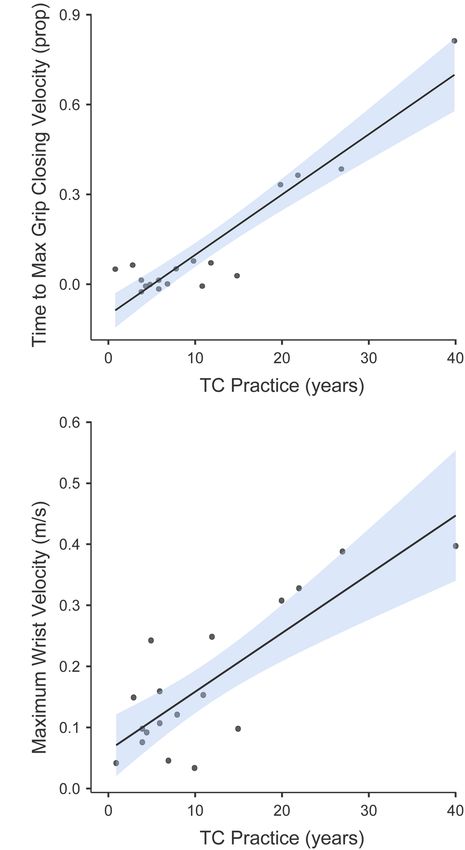
Sartori et al.                                                                                                            Tai Chi and Mental Imagery

INTRODUCTION                                                                size and spatial location; Jakobson and Goodale, 1991), as well
                                                                            as to the agent’s intention in grasping the object (e.g., grasping
Tai Chi (TC) is a moving mind-body exercise characterized by                a bottle for pouring versus for throwing; Ansuini et al., 2008),
circular, slow, and smooth movements that originated in China               so that although the to-be-grasped object remains the same,
more than 1200 years ago (Li et al., 2001). It is well-established          different kinematic patterns are produced. In particular, a large
that the slow tempo facilitates a sensory awareness of the speed,           number of kinematic studies have highlighted that when task
force, trajectory, and execution of movement throughout the                 complexity requires a careful or difficult positioning of fingertips
practice (Tse and Bailey, 1992). In TC, the body is naturally               on the object, a longer deceleration occurs while approaching the
extended and relaxed, the mind is calm but alert, and body                  target and progressively closing the fingers on it before contact
movements are well-coordinated. The practice includes balanced              (Marteniuk et al., 1990; Becchio et al., 2008a,b; Sartori et al.,
body positions that flow from one to the next and promote mental            2009). This compensatory strategy allows extra time to make on-
concentration to improve motor efficiency and flexibility, two              line corrections based on visual feedback (i.e., a safety margin;
aspects that lay the foundation for an optimized motor control              Wing et al., 1986; van Vliet and Sheridan, 2007; Michaelsen et al.,
(Wahbeh et al., 2008). Recently, a few Chinese Masters (e.g.,               2009). When driving a car, for instance, a longer deceleration is
Wang Zhuanghong, 1931–2008) have restored a classical TC                    needed in order to precisely stop at the red light if the car is
practice that emphasizes mental imagery (MI) rather than motor              novel or the pilot is inexperienced, otherwise your vehicle may
repetition or aesthetical aspects. In this respect, TC has more to          miss the target. The deceleration phase in patients with post-
offer than a simple relaxation technique. A deep investigation              stroke hemiparesis, for instance, is longer than that of healthy
of its movement principles could furnish a new mind-body                    subjects (van Vliet and Sheridan, 2007). Once driving is well-
perspective able to highlight its impact on kinematic fluidity              performed, instead, the braking will be short, gentle and precise.
and to develop new interventions for improving motor control                The same principle applies to reaching and grasping movements,
and (re)learning.                                                           with later deceleration and closing of the hand indicative of
    Despite a growing interest on the mechanical bases of                   a more dexterous movement (Castiello et al., 1992; Becchio
TC, most of the literature is largely based on qualitative or               et al., 2008a,b). This reflects the fact that a greater part of
poorly controlled observations. In particular, the low quality              the movement is centrally programmed (ballistic) and a small
of the research designs, the limitations in the methodology                 amount of time is needed to calibrate fingertip placement on the
(e.g., inadequate control groups, deficient statistical analyses,           object (Sartori et al., 2011).
no randomized trials) and their great heterogeneity (e.g., huge                Notably, improved reaching and grasping efficiency is
variability in series of postures usually called “forms”) make              subtended by a decreased muscular activation (Wagner et al.,
comparisons across studies very difficult. Here we adopted                  2007), thereby highlighting a strong relationship between
an ecologically valid paradigm in conjunction with objective                kinematic performance and the muscular effort to perform the
methods and statistics, and two controlled groups of participants           task. In particular, since individuals execute hundreds of reach
covering a full range of expertise levels.                                  movements throughout a typical day, then it is critical that each
    Until recently few studies have focused on the effect of TC             repetition of the movement requires only a minimal muscle effort
by means of 3-D analysis of movement (e.g., Law and Li,                     (Wagner et al., 2007).
2014). Kinematics is the mathematical description of movement,                 Taken together, those findings represent an important
which is defined in terms of velocity, time, trajectories and               advancement in the motor control literature as the study of
acceleration. To our knowledge, no study has examined the                   intentions and motor strategies during the performance of a
relationship between TC and MI during a reach-to-grasp                      simple motor task provides an indication of their systemic
movement. This simple everyday gesture might prove to be                    importance. Nowadays, motor execution is no longer seen as a
an effective experimental task to objectively compare people                purely mechanical process, dissociated from mental components.
who perform this practice with untrained participants. Testing                 Interestingly, TC Classics from the 18th Century claim that
a learned TC form would not allow such comparison in a control              TC entails two levels: (i) building a set of fundamental postures
group, since expertise would play a crucial role. Analyzing the             to attain smooth and circular movements; and ii) using mental
kinematic characteristics of a simple reach-to-grasp task (i.e.,            intent to guide movement. The mind should not directly focus
an ecologic framework), instead, might lend insight into which              on how to perform a movement. Rather, we should focus on
aspects of motor control are affected by TC.                                intention and this will (indirectly) move the body (Ying and
    Reaching and grasping objects represents a basic gesture                Chiat, 2013). Moving the external body without involving the
that humans perform routinely in a variety of contexts and                  mind is not TC (Ying and Chiat, 2013). A central concept of TC is
that requires the coordination of multiple upper extremity                  indeed a focused attention on a specific scenery or an image in a
segments (Sejnowski, 1998). It is also a movement that has been             realistic visualization (i.e., with real sensations and perceptions)
well characterized experimentally in terms of two functionally              for an extended period of time. Indeed, directing attention to
coupled components: a transport component, in charge of                     a specific image – instead of the movement itself – is known
moving the arm close to the object, and a grip component,                   to facilitate motor performance (Abdollahipour et al., 2015;
responsible for preparing the hand (i.e., pre-shaping) to capture           Schmalzl et al., 2015), and may accelerate motor (re)training
the object (for a review see Castiello, 2005). Both components are          by promoting the execution of natural and quasi-automatic
sensitive to different characteristics of target object (e.g., object       movements (Wulf and Lewthwaite, 2010).

Frontiers in Physiology | www.frontiersin.org                           2                                         April 2020 | Volume 11 | Article 297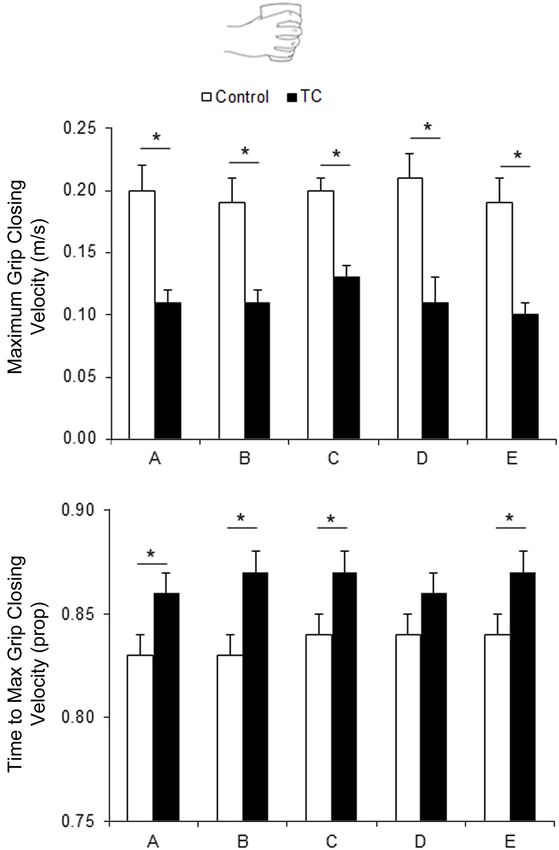
Sartori et al.                                                                                                             Tai Chi and Mental Imagery

    The pioneering work on piano playing by Pascual-Leone                  Motor Flexibility as the ability to modulate the trajectory path
(2001) has shown that the acquisition of a new skill is                    of an automatized movement by focusing on a highly dynamic
characterized by a three-step progression:                                 image at a given moment. Moreover, capitalizing on the seminal
    Step 1 | Basic skill acquisition. Attention is focused on              work by Xu et al. (2003) on kinematics and EMG analysis,
controlling every single movement. “At the beginning, the limbs            we computed the Range (i.e., difference between the maximum
move slowly, with fluctuating accuracy and speed, and success              and the minimum values across conditions) for all kinematic
requires visual, proprioceptive, and auditory feedback.” (Pascual-         parameters as an index of motor variability, associated with
Leone, 2001, p. 316). A well-known principle in motor control              Motor Flexibility. In this regard, we should distinguish between
literature is that focusing on proprioceptive information is crucial       the concepts of “External” variability (i.e., induced by an external
to improve neuromuscular control (Irrgang and Neri, 2000; Eils             agent or the context) and “Internal” variability (i.e., inherent in
and Rosenbaum, 2001). In this respect, TC can be particularly              the motor system when performing a task). External variability
proficient in increasing joint proprioception by providing ideal           can promote adaptability to novel or different contexts (Merbah
exercises (e.g., kinetic chain exercises that enhance conscious            and Meulemans, 2011), as highlighted in the Motor Schema
awareness of joint position and movement; Irrgang and Neri,                Theory (Schmidt, 1975). A generalized motor program consists
2000; Cerulli et al., 2001; Hong and Li, 2007).                            of an abstract memory structure apt to guide a range of
    Step 2 | Motor Efficiency. Once the basic skill is acquired,           movements (e.g., reach-to-grasp actions; Schmidt, 1975). These
muscular effort is reduced and attention can be shifted to                 actions are subserved by a Schema (i.e., a rule developed by
mastering the technique. “Eventually, each single movement                 practice) which describes a relationship between the outcome of
is refined, the different movements chained into the proper                a program and the chosen parameters. Interestingly, increasing
sequence with the desired timing, . . . and a fluency of all               variability in experiences can lead to increased generalization,
movement developed” (Pascual-Leone, 2001, p. 316). Motor                   yielding therefore superior performance in terms of movement
Efficiency is measurable by dexterity in performance and                   adaptation. Internal variability, then, is the repertoire of motor
decreased muscular effort. In this regard, kinematics can offer            Schema from which we can select to adapt successfully to
an indirect measure of muscular patterns, as revealed by a                 changes. In this regard, a classic example are the hammer
recent study combining kinematic and EMG measures during                   trajectories of expert blacksmiths who can hit the target with
the execution of reach-to-grasp actions. In particular, Betti et al.       a functional variability (Bernshteı̌n, 1967). In highly skilled
(2018) showed that a short phase of hand closing on the target –           movements, internal variability should not be confused with
indexed by a late grip aperture – was correlated with a decreased          lack of consistency or variable error (e.g., a large spread in the
activation of hand muscles (Betti et al., 2018). More in general,          distribution of an archer’s arrows or a Parkinson’s tremor). It
combined EMG-kinematic studies associate reaching efficiency               is often assumed that successful outcomes can only arise from
with reduced wrist velocity and deceleration (van Vliet and                high consistency in movement execution (e.g., low variability
Sheridan, 2007; Wagner et al., 2007), while good accuracy and              in the kinematics of the hand). But this is not necessarily the
later closing of the hand are signs of grasping dexterity (Castiello       case. Recent research in motor control has shown that a certain
et al., 1992; Becchio et al., 2008a,b).                                    degree of internal variability (i.e., motor flexibility) is required
    Step 3 | Mental integration. Once the technique is refined,            for optimal motor performance (Harbourne and Stergiou, 2009;
all the cognitive resources can be devoted to mental aspects.              Ranganathan and Newell, 2013).
“Only then can the pianist shift his or her attentional focus                  Despite the emerging body of research indicating a link
away from the mechanical details of the performance toward                 between MI and modulation of performance, further research
the emotional content of the task.” This aspect is in line with            is required. In particular, it is currently unknown whether
the concept of “flow” (Csikszentmihalyi, 1991), which entails the          the combined use of TC and MI may produce more flexible
execution of natural and flawless movements whilst the mind is             motor control. Furthermore, it is possible that expertise may
fully concentrated.                                                        differentially modulate this effect, but this has not yet been tested.
    In this framework, the TC classics specifically highlight a                Mental imagery is one of the most characteristic aspects of
fourth level, that can be trained from Step 2 on out:                      human thought. It is conceived as mental representations of
    Step 4 | Motor Flexibility. Intention moves the body and this          events or stimuli in the absence of sensory inputs from the
leads to a new achievement in terms of performance: Motor                  external world (Palmiero et al., 2019). TC training is typically rich
Flexibility, defined as the ability to modulate even an automatized        in images such as “move like a river or light as a cloud” that guide
movement (e.g., when walking on a slippery surface). A flexible            practitioners toward specific kinesthetic states. A considerable
motor control would allow an athlete to compensate for severe              amount of research in psychology has focused on techniques such
injuries and still perform at the highest levels, overcoming a             as MI in order to draw attention away from the everyday mind
particular impairment at a given moment. The ability to integrate          flow, reach an attentive state and attain a better performance
more options at a time is a trademark of Motor Flexibility,                (Abdollahipour et al., 2015; Schmalzl et al., 2015).
and kinematics has been extensively used to track this feature                 The aim of the present study was to characterize how
of the on-line motor control system. In particular, Trajectory             a reach-to-grasp action (representative of everyday motor
Deviation has been classically used to reveal the concomitant              performance) is influenced by TC training that incorporates
presence of different motor plans (Chieffi et al., 1993; Howard            a significant degree of MI. We adopted a simple motor task
and Tipper, 1997; Sartori et al., 2009). Here we considered                that is performed hundreds of times every day to consider

Frontiers in Physiology | www.frontiersin.org                          3                                           April 2020 | Volume 11 | Article 297
Sartori et al. Tai Chi and Mental Imagery
both TC performers and untrained participants, therefore should be reflected in highly consistent movements within
minimizing the confounding variable of movement expertise. conditions, and highly variable movements across conditions,
Expertise is generally defined as the highest level of performance being dependent on a given image at a given time. Lastly,
on a specific task or within a specific domain (Bourne we hypothesized that TC expertise could also produce a better
et al., 2014). Testing different groups of people on this task performance on sustained attention.
allowed us to exclude possible effects caused by different
sport practices.
We enrolled a group of TC practitioners and a group of MATERIALS AND METHODS
control participants. Specifically, we applied a reach-to-grasp
paradigm to assess the effect of five mental images while grasping Ethics Statement
and lifting an object between the thumb and palm, i.e., a The experiments were approved by the Ethics Committee of
whole-hand grasp. In this vein, we chose a school of TC that the University of Padua (No 2687), in accordance with the
specifically focuses on mental concentration and imagery from Declaration of Helsinki (Sixth revision, 2008). All participants
the beginner level, rather than introducing it only at the advanced signed written informed consent prior to the beginning of their
level. In this regard, motor repetition is not predominant with experimental session.
respect to the mental component of movement. The TC master
representing this MI approach carefully selected three mental Participants
images related to water: flowing water, wave, and whirlpool. Thirty participants took part in the experiment: 15 TC
These images imply a movement of water with an increasing practitioners (with different expertise levels) and 15 untrained
degree of dynamicity. He then added a fourth item: opening participants. In particular, one élite TC Master (age: 60; years
water flower, an image that implies an expanding movement of experience: 40), four TC Instructors (age range: 40–54;
and can produce a feeling of marvel. Emotions involve specific mean of years’ experience: 10; 3 males and 1 female) and ten
peripheral physiological responses, which can enable emotion- TC Apprentices (age range: 28–71; mean of years’ experience:
specific actions (Zhang and Keltner, 2016). Notably, all these 6; 6 males and 4 females) from a local TC School, and
images were novel and had not previously been learned by fifteen Control Participants (age range: 21–35; 5 male and
his practitioners. In order to set a baseline value we devised a 10 female) from a local gym without any TC experience,
neutral fifth image, still water, pertaining to the water context were recruited at the Neuroscience of Movement Laboratory
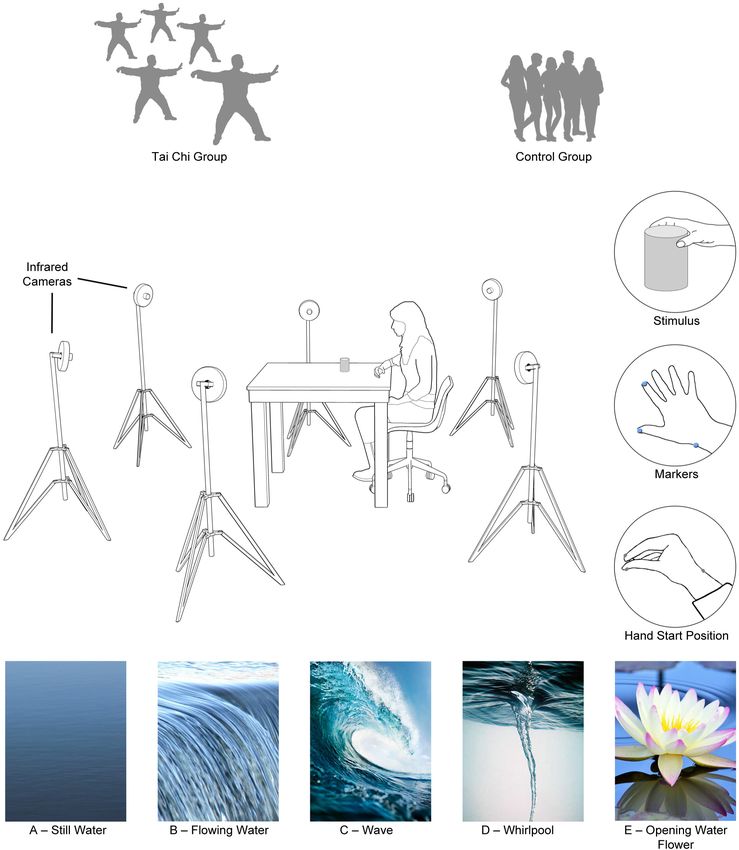
but not implying any movement. The rationale for adopting a (NeMo) (Figure 1A). All the participants were right-handed
neutral image instead of giving no images at all was to exclude (Briggs and Nebes, 1975) and had normal or corrected-to-
the possibility that participants adopted an (uncontrolled) normal vision. They were naïve to the experimental design
image on their own. and study purpose.
Finally, since TC is thought to determine better mental-
attentional vigilance (Kim et al., 2016) we specifically tested this Stimulus
aspect by means of the Continuous Performance Test (CPT), a The stimulus was a wooden cylinder (weight 150 g, height 11 cm,
widely used measure of sustained attention (Hsieh et al., 2005). diameter 7.5 cm) located at 35 cm from the hand start position
Testing this variable was aimed at verifying possible correlations (Figure 1B) in all conditions.
with TC practice.
We hypothesized that focusing on MI during the task would Procedure
influence prehensile kinematics, in particular for the group Before starting the experimental session, all participants
already trained at adopting MI strategies. If the combined performed the CPT on a computer to assess their sustained
use of mental images during TC training develops the ability attention. A time series of letters (from A to Z) were randomly
to perform (i) efficient and (ii) flexible movements, then it presented on a monitor and participants were instructed to
should affect also automatized movements such as reach-to- press a switch button in response to each letter, except for a
grasp actions. In particular, we expected a well-calibrated and critical stimulus. The critical stimulus was a particular single
timely grip aperture (Jeannerod et al., 1995) in both the TC stimulus out of the available set (i.e., the letter “X”). Participants
and Non-TC groups, due to the fact that the task is simple were instructed to perform the task as correctly as possible.
and highly automatized. However, if TC participants are more Letters were presented on a 5 cm square matrix. The inter-
able to take advantage of mental images than the control group, stimulus interval was 800 ms and the stimulus duration was
this accuracy should be achieved with less cost. Specifically, a 200 ms. The available response time was 700 ms. The CPT
greater (i) Motor Efficiency should be revealed by a lower wrist test began with 2 min of practicing and it lasted 10 min. For
velocity and deceleration during the reaching phase, and by the reach-to-grasp trials, the participants then sat on a height
a firm closure of the fingers around the object without safety adjustable chair in front of a working surface with elbow and
margins. As concerns (ii) Motor Flexibility, we expected an wrist on the table (90 × 90 cm). All participants were tested
enhanced trajectory deviation associated with the more dynamic individually. Before each trial, the right hand of each participant
image in the TC compared to the Non-TC group. Moreover, we was resting on a starting pad with the thumb and the index
hypothesized a link between TC expertise and motor variability finger gently in opposition (Figure 1B). The task was to reach
(i.e., the Range of movement kinematics). Motor Flexibility toward and grasp the cylinder, while focusing on a mental
Frontiers in Physiology | www.frontiersin.org 4 April 2020 | Volume 11 | Article 297Sartori et al. Tai Chi and Mental Imagery FIGURE 1 | Set up and procedure. (A) Two groups of participants were recruited: a TC and a Control Group. (B) A 3D-Optoelectronic SMART-D system was used to track the kinematics of the participant’s right upper limb by means of six video cameras. Infrared reflective markers were taped to the following points: thumb, index finger, and wrist to measure the grasp and reach component of the movement. Participant’s hand was positioned with the thumb and the index finger in opposition on a starting pad located at 35 cm from the cylinder they had to grasp after the Go signal. (C) During the reach-to-grasp task, participants were instructed to focus on a different mental image for each condition (Still Water, Flowing Water, Wave, Whirlpool or Opening Water Flower). image. The motor task was kept deliberately simple so as to Each participant performed ten trials for each condition, for a facilitate MI with open eyes. The participants were requested total of 50 trials. to start the action after a go-signal was delivered and they were tested in five randomized experimental conditions (Figure 1C), Apparatus each corresponding to a different mental image: still water Six infrared cameras (sampling rate 140 Hz) detecting three (condition A), flowing water (condition B), wave (condition C), infrared reflective markers (6 mm diameter) were placed in whirlpool (condition D) and opening water flower (condition E). a semicircle at a distance of 1–1.2 meters from the room’s Frontiers in Physiology | www.frontiersin.org 5 April 2020 | Volume 11 | Article 297
Sartori et al.                                                                                                             Tai Chi and Mental Imagery

center. The movements were recorded using a SMART motion                       • Time to Maximum Wrist Velocity (TMWV, the proportion
analysis system (Bioengineering Technology and Systems [B|                       of time at which wrist velocity reached its peak from
T| S]). Cameras captured the movements of the markers in                         movement onset);
3D space (Figure 1B). The coordinates of the markers were                      • Time to Maximum Wrist Deceleration (TMWD, the
reconstructed with an accuracy of 0.2 mm over the field of view.                 proportion of time at which wrist deceleration reached its
The standard deviation of the reconstruction error was 0.2 mm                    minimum peak from movement onset);
for the vertical (Y) axis and 0.3 mm for the two horizontal (X and             • Time to Maximum Trajectory Deviation (TMTD, the
Z) ones. In Jeannerod (1981) described two major components                      proportion of time at which the maximum deviation of
for prehensile behavior: the transport and the grasp components.                 the 3D coordinates of the wrist occurred from movement
The transport component brings the hand close to the object. The                 onset);
grasp component is concerned with finger pre-shaping during                    • Time to Maximum Grip Aperture (TMGA, the proportion
transport and finger closing around the object. Two markers                      of time at which thumb and index finger reached a
were then placed on thumb (ulnar side of the nail) and index                     maximum distance, calculated from movement onset);
finger (radial side of the nail) to measure the grasping component             • Time to Maximum Grip Closing Velocity (TMGCV,
of the action. One marker was taped on the wrist (dorsodistal                    the proportion of time at which thumb and index
aspect of the radial styloid process) to measure the reaching                    finger reached a maximum closing velocity from
component of the action.                                                         movement onset);

                                                                                For each variable the Range (i.e., difference between
Data Analysis                                                               the maximum and the minimum values across conditions;
Following kinematic data collection, each trial was individually            Woodbury, 2001) was computed as an index of Motor Flexibility
checked for correct marker identification and then run through              (for a similar approach see Xu et al., 2003) and was used as
a low-pass Butterworth filter with a 6 Hz cutoff. The SMART-                the dependent variable in a regression analysis with years of
D Tracker software package (Bioengineering Technology and                   TC practice. Finally, we tested the difference between the two
Systems, B|T| S) was employed to reconstruct the 3-D marker                 groups on the d’ (Heeger, 1997; Macmillan and Creelman, 2004)
positions as a function of time. One participant was eliminated             of the CPT. According to the Signal Detection Theory, the d’
from the data set due to a technical problem. We selected a set of          (sensitivity) is a measure of the subject’s ability to discriminate a
standard measures classically reported in the literature for reach-         signal (here, the letter “X” appearing in a very few trials) from the
to-grasp tasks (Wing et al., 1986; Castiello et al., 1992; Gentilucci       background noise (i.e., all the other letters). A higher d’ indicates
et al., 2003), possibly enabling a productive comparison of                 better processing capabilities. In the present experiment, a better
results across participants (TC practitioners, No-TC) and across            ability to discriminate the crucial letter for a long time would
experiments. We first computed movement time as the temporal                reflect a good sustained attention.
interval between movement onset (i.e., the first time point at
which the wrist velocity crossed a 5 mm/sec threshold and                   Statistical Analyses
remained above it for longer than 500 ms) and time of grip                  Behavioral data were analyzed using the jamovi 0.9.6.9 statistical
offset, when fingertips made contact with the object (i.e., the time        software (The jamovi project, 2019). Data analysis was divided
at which the grip closing velocity dropped below the 5 mm/s                 into two main parts: the first one was aimed at testing the
threshold; Chinellato et al., 2015). Then the following indexes             effect of belonging to the TC group on the behavioral variables
were measured:                                                              related to the reach-to-grasp task in the different sessions of the
                                                                            experiment (i.e., eliciting different mental images); the second
    • Maximum Wrist Velocity (MWV, the 3D resultant peak of                 one was aimed at determining the role of TC practice focused
      wrist velocity);                                                      on MI in predicting motor flexibility. The first part of the
    • Maximum Wrist Deceleration (MWDec, the maximum                        analysis consisted in fitting Linear Mixed Effect Models having
      deceleration of the 3-D coordinates of the wrist);                    the five Sessions (A, B, C, D, and E) as within fixed effects,
    • Maximum Trajectory Deviation (MTD, the maximum                        the two Groups (TC and No-TC) as between fixed effects, and
      deviation of the 3-D coordinates of the wrist from the ideal          Individuals as random effects. Such models, including contrasts
      line linking the starting position with the end position);            and post hoc comparisons with Bonferroni correction, were
    • Maximum Grip Aperture (MGA, the maximum radial                        fitted for each of the kinematic variables. All the models were
      distance reached by the 3-D coordinates of the thumb and              fitted using the General Analyses for Linear Models of the
      index finger);                                                        jamovi software (Gallucci, 2019). The second part of the analysis
    • Maximum Grip Closing Velocity (MGCV, the maximum                      consisted in fitting a number of linear regression models on
      velocity of the 3-D coordinates of the thumb and index                the same dependent variables, having as predictor the number
      finger during hand closing);                                          of years of TC practice. These analyses were conducted using
                                                                            the Companion to Applied Regression V.3 (Fox and Weisberg,
   The temporal peaks were then normalized with respect                     2018) and the Estimated Marginal Means version 1.4.1 (Lenth
to movement time, so that individual speed differences were                 et al., 2019) packages of the statistical software R (R Core Team,
accounted for:                                                              2018), implemented in jamovi. As concerns the CPT, we used the

Frontiers in Physiology | www.frontiersin.org                           6                                          April 2020 | Volume 11 | Article 297
Sartori et al. Tai Chi and Mental Imagery
29.97 ( ± 12.86)
proportion of hits (i.e., proportion of correct detection) and false
2.03 ( ± 0.70)
0.46 ( ± 0.14)
1.2 ( ± 0.59)
127.17 ( ± 8.47)
0.1 ( ± 0.04)
0.35 ( ± 0.05)
0.43 ( ± 0.06)
0.7 ( ± 0.06)
0.87 ( ± 0.04)
0.53 ( ± 0.1)
alarms (i.e., proportion of stimuli reported when not present) to
calculate the d’. Before the d’ calculation, the hit and false alarm
TC
proportions were corrected by adding 0.5 to both the number
of hits and the number of false alarms and adding 1 to both
the number of signal trials and the number of noise trials to
E
1.35 ( ± 0.29)
0.61 ( ± 0.11)
1.91 ( ± 0.61)
20.77 ( ± 7.42)
129.76 ( ± 7.44)
0.19 ( ± 0.06)
0.36 ( ± 0.07)
0.55 ( ± 0.09)
0.47 ( ± 0.09)
0.67 ( ± 0.05)
0.84 ( ± 0.03)
avoid indeterminate values (loglinear approach; Hautus, 1995).
d’ values were then submitted to an independent samples t-test.
Control
RESULTS
38.68 ( ± 18.29)
1.78 ( ± 0.53)
0.48 ( ± 0.12)
1.34 ( ± 0.53)
125.11 ( ± 8.14)
0.11 ( ± 0.06)
0.37 ( ± 0.05)
0.57 ( ± 0.13)
0.42 ( ± 0.05)
0.72 ( ± 0.08)
0.86 ( ± 0.04)
Linear Mixed Effect Models
Means and Standard Deviations for each kinematic parameter,
TC
experimental conditions and group are reported in Table 1.
Significant fixed effects emerged out of several models. Moreover,
D
planned contrasts highlighted, for two variables, different
1.24 ( ± 0.25)
0.66 ( ± 0.12)
2.16 ( ± 0.72)
20.62 ( ± 8.58)
129.86 ( ± 7.78)
0.21 ( ± 0.08)
0.37 ( ± 0.05)
0.56 ( ± 0.09)
0.46 ( ± 0.07)
0.67 ( ± 0.04)
0.84 ( ± 0.02)
behavioral patterns in Session E compared with all the other ones.
Control
Movement Time
The analysis showed significant main effects of Group
(F 1.27 = 13.74; p < 0.001) and Session (F 4.108 = 3.60; p = 0.009).
29.5 ( ± 16.77)
The TC group presented higher Movement Time (M = 1.90s;
1.88 ( ± 0.55)
0.49 ( ± 0.13)
1.33 ( ± 0.59)
126.5 ( ± 7.96)
0.13 ( ± 0.06)
0.38 ( ± 0.07)
0.57 ( ± 0.14)
0.42 ( ± 0.06)
0.71 ( ± 0.08)
0.87 ( ± 0.03)
SD = 0.59) compared with the Non-TC control group (M = 1.29s;
SD = 0.28). Post hoc comparisons showed that the TC group
TC
TABLE 1 | Means and Standard Deviations in brackets for each kinematic parameter, experimental conditions and group.
had significantly higher values with respect to Non-TC control
group in Session A (t 34.85 = −3.66; p = 0.037), B (t 34.85 = −3.79;
C
p = 0.026), and E (t 34.85 = −3.82; p = 0.024).
1.33 ( ± 0.33)
0.64 ( ± 0.13)
2.11 ( ± 0.64)
22.12 ( ± 7.07)
129.05 ( ± 5.68)
0.2 ( ± 0.05)
0.35 ( ± 0.04)
0.48 ( ± 0.09)
0.68 ( ± 0.03)
0.84 ( ± 0.04)
0.57 ( ± 0.1)
Maximum Grip Closing Velocity
Control
A significant Group main effect was observed (F 1.27 = 23.33;
p < 0.001), with the TC group having lower values (M = 0.11 m/s;
SD = 0.05) compared to the Non-TC control group 33.21 ( ± 17.53)
(M = 0.20 m/s; SD = 0.06; see Figure 2A). The post hoc
1.90 ( ± 0.58)
0.49 ( ± 0.14)
1.35 ( ± 0.63)
125.74 ( ± 7.28)
0.11 ( ± 0.03)
0.37 ( ± 0.06)
0.54 ( ± 0.14)
0.43 ( ± 0.07)
0.72 ( ± 0.08)
0.87 ( ± 0.04)
comparisons with Bonferroni correction highlighted that the
TC group presented significantly lower values with respect to
TC
Non-TC control group in Sessions A (t 44.50 = −4.46; p = 0.002),
B (t 44.50 = −3.84; p = 0.017), C (t 44.50 = −3.68; p = 0.028), D
B
(t 44.50 = −4.78; p < 0.001), and E (t 34.85 = −4.43; p = 0.003).
1.25 ( ± 0.29)
0.66 ( ± 0.11)
2.11 ( ± 0.62)
22.94 ( ± 8.90)
129.46 ( ± 8.50)
0.19 ( ± 0.06)
0.37 ( ± 0.06)
0.66 ( ± 0.04)
0.83 ( ± 0.03)
0.57 ( ± 0.1)
0.45 ( ± 0.1)
Control
Maximum Wrist Velocity
A significant main effect of the group was found (F 1.27 = 15.54;
p < 0.001), with the TC Group presenting lower values
(M = 0.49 m/s; SD = 0.13) than the Non-TC control group
28.02 ( ± 10.66)
1.92 ( ± 0.64)
0.47 ( ± 0.13)
1.22 ( ± 0.55)
126.9 ( ± 8.58)
0.11 ( ± 0.04)
0.35 ( ± 0.05)
0.42 ( ± 0.07)
0.7 ( ± 0.09)
0.86 ( ± 0.04)
(M = 0.65 m/s; SD = 0.12). Post hoc comparisons showed
0.51 ( ± 0.1)
a significant difference between the two groups in Session
TC
A (t 40.80 = 4.03; p = 0.011), B (t 40.80 = 3.64; p = 0.034),
and D (t 40.80 = 3.74; p = 0.026). Interestingly, the planned
contrasts for the Session effect highlighted a significant difference
A
between the values observed for Session E and all the remaining
1.25 ( ± 0.26)
0.66 ( ± 0.13)
2.18 ( ± 0.73)
22.25 ( ± 7.93)
129.19 ( ± 8.03)
0.2 ( ± 0.07)
0.35 ( ± 0.05)
0.54 ( ± 0.09)
0.47 ( ± 0.09)
0.66 ( ± 0.05)
0.84 ( ± 0.02)
sessions (t 108 = −2.88; p = 0.005). More precisely, the
Control
values observed for Session E were significantly lower than
the remaining ones.
Maximum Wrist Deceleration
TMWDec
TMWDev
MWDec
TMGCV
MWDev
A significant Group effect (F 1.27 = 14.48; p < 0.001) indicated a
TMWV
MGCV
MWV
TMA
MA
MT
significantly smaller deceleration in the TC group (M = 1.29 m/s2 ;
Frontiers in Physiology | www.frontiersin.org 7 April 2020 | Volume 11 | Article 297Sartori et al. Tai Chi and Mental Imagery
Time of Maximum Wrist Velocity
A significant main effect for the Session was found (F 4.108 = 2.76;
p = 0.031). The post hoc analysis did not highlighted any
significant differences.
Maximum Trajectory Deviation
A significant interaction effect between Group and Session
was found (F 4.108 = 3.33; p = 0.013), indicating differences
between the two groups which varied across sessions. Post
hoc comparisons found a significant difference between the
two groups for Session D (t 46.70 = −3.87; p = 0.015), with
the Tai-chi group presenting higher values of right deviation
(M = 31.90 mm; SD = 15.70) than the Non-TC control group
(M = 21.70 mm; SD = 7.82).
No significant effects were found with respect to the variables:
Time to Maximum Trajectory Deviation (Group: p = 0.118.
Session: p = 0.891. Interaction: p = 0.815); Time to Maximum
Wrist Deceleration (Group: p = 0.701. Session: p = 0.061.
Interaction: p = 0.819); Maximum Grip Aperture (Group:
p = 0.238. Session: p = 0.864. Interaction: p = 0.696); Time to
Maximum Grip Aperture (Group: p = 0.060. Session: p = 0.526.
Interaction: p = 0.345).
A final result refers to the statistically significant difference
between the TC and the Non-TC control group on the CPT
as indexed by the d’ (t 24 = 2.47; p = 0.021, Cohen’s d = 0.95).
Participants of the TC group presented higher values (M = 0.98;
SD = 0.82) compared to participants of the control group
(M = 0.01; SD = 1.17), thus indicating a better sustained attention.
In particular, the average Hit score (i.e., number of correct
guesses) was 24 vs. 19 for the TC compared to the Non-TC
control group, respectively. And the False Alarm score (i.e.,
number of incorrect guesses) was 12 vs. 17 for the TC with respect
FIGURE 2 | Graphical representation of the mean values for (A) the Maximum to the control group, respectively.
Grip Closing Velocity and (B) the Time to Maximum Grip Closing Velocity. Bars
represent SD of the mean. The spatial and temporal components of Grip
Closing Velocity indicate that the Finalization Phase of the movement in TC
Linear Regression Models
group was characterized by a more careful approach on the object, just The second part of the analysis was aimed at investigating
before contact. *p < 0.01. the role of TC practice in predicting the motor flexibility, as
described by the Range (i.e., delta for each behavioral datum,
between the highest and the lower values across different sessions;
SD = 0.57) than in the Non-TC control group (M = 2.09 m/s2 ; see Table 2). This was done by fitting a number of linear
SD = 0.65). The contrast indicated a significant difference regression models having as predictor the number of years of
between the values observed for Session E and all the remaining supervised teaching – with a focus on MI, and the delta variables
sessions (t 108 = 2.88; p = 0.005), with the former smaller as dependent. Two kinematic deltas were predicted by the
than the others. number of years of TC practice, namely the Time to Maximum
Grip Closing Velocity (β = 0.92; F 1.13 = 69.32; p < 0.001;
R2 = 0.84; Figure 3A) and the Maximum Wrist Velocity (β = 0.74;
Time of Maximum Grip Closing Velocity F 1.13 = 15.43; p = 0.002; R2 = 0.54; Figure 3B).
A significant effect of Group was observed (F 1.27 = 6.38;
p = 0.018), with the TC group presenting a later peak
(M = 0.87; SD = 0.04) than the Non-TC control group DISCUSSION
(M = 0.84; SD = 0.03; see Figure 2B). The post hoc
comparisons with Bonferroni correction highlighted that The primary aim of this experiment was to investigate whether
the TC group presented significantly more delayed values a reach-to-grasp action was influenced by TC training based
with respect to Non-TC control group in Sessions A on MI in a TC group with respect to an untrained group.
(t 44.50 = −3.79; p = 0.026), B (t 44.50 = −4.56; p = 0.004), C The most important findings were that the combination of
(t 44.50 = −3.78; p = 0.035), and E (t 34.85 = −4.03; p = 0.010; TC and MI was indeed effective in accurately accomplishing
see Figure 2B). the task with significantly less kinematic costs. In line with
Frontiers in Physiology | www.frontiersin.org 8 April 2020 | Volume 11 | Article 297Sartori et al. Tai Chi and Mental Imagery
TABLE 2 | Means and Standard Deviations for Range of each
kinematic parameter.
Range Mean SD
MT 0.52 0.35
MWV 0.14 0.10
MWDec 0.48 0.28
MWDev 17.97 12.81
MA 8.06 4.41
MGCV 0.06 0.04
TMWV 0.08 0.04
TMWDec 0.17 0.09
TMWDev 0.10 0.06
TMA 0.09 0.06
TMGCV 0.10 0.20
our prediction, results revealed that TC can influence reach-
to-grasp actions, one of the most automatized movements of
our everyday life, by adding (i) Efficiency and (ii) Flexibility.
Concerning (i) Motor Efficiency, the TC group showed lower
wrist velocity and deceleration while approaching the object,
consistent with them moving more slowly, indicating the ability
to carefully land the arm without the muscular effort of a sudden
stop. The grasping component of the movement, moreover, was
characterized by a gentler and later closing of the hand while
approaching the object – in TC vs. No-TC group, as indicated
by the Time and Amplitude of Maximum Grip Closing Velocity.
This indicates that there was no need for extra time (i.e., a
safety margin) to correctly calibrate fingertip placement on the
object. Taken together, these results indicate that a combined
training of TC and MI can affect reach-to-grasp kinematics of
daily movements performed dozens of times in our everyday
life. In particular, it develops the ability to gradually approach
objects and to firmly finalize the grasping movement. This, in
turns, allows for a more efficient performance. Interestingly,
while task accuracy remained constant in both groups (i.e., the
scaling of grip aperture was timely and well calibrated to the
object size; Jeannerod et al., 1995; Michaelsen et al., 2009), FIGURE 3 | Graphical representation of the regression on Range values for
only the TC group showed an enhanced level of (ii) Motor (A) the Time to Maximum Grip Closing Velocity and (B) the Maximum Wrist
Velocity, having as predictor the number of years of TC practice. Expertise
Flexibility, as indicated by a larger deviation of movement
was found to predict motor flexibility, with more years of practice predictive of
trajectory specific for the image characterized by the greatest a larger Range of velocity patterns, at the level of both the reaching and
degree of dynamicity (i.e., “whirlpool,” Session D). Deviations of grasping components.
movement trajectory from an ideal line linking the hand starting
position with the object position are used in kinematical literature
to unveil concurrent motor programs and flexible reorganization
of movement aiming at permitting a range of actions dictated (i.e., between different images) compared to the Non-TC group.
by the environment (e.g., Tipper et al., 1998). Activating parallel This outcome was present at the level of both the reaching and
representations of all the objects and action possibilities in a grasping components (i.e., Maximum Wrist Velocity and Time to
given context allows individuals to better navigate the space Maximum Grip Closing Velocity, respectively). The Feldenkrais
(e.g., grasping an object without bumping other objects close Method (Feldenkrais, 1985) of movement awareness holds
to the target). TC practice, for instance, teaches you to move that functional movements are reversible. When performing
as if you were walking on ice, so that once a sudden event a “reversible movement” the mover is not only committed
occurs, you can always reach stability. In TC terminology, this to continue on a trajectory, but can stop, start, or change
is termed reversibility principle and it closely refers to flexibility direction at any time. People normally violate this ideal: it is
as a prerequisite. Moreover, the TC group showed a larger quite common, for instance, to collide with someone who steps
range of Internal variability across – not within – conditions in your path without warning. A movement that can change
Frontiers in Physiology | www.frontiersin.org 9 April 2020 | Volume 11 | Article 297Sartori et al. Tai Chi and Mental Imagery
its mind, instead, might stop midstream, change direction, or down of wrist velocity and deceleration – a measure associated
continue. The behavioral flexibility of intentional actions can with decreased mechanical effort (van Vliet and Sheridan, 2007;
serve as a standard measure of the level of organization, or Wagner et al., 2007), in both the trained and the untrained
quality, of the action (Feldenkrais, 1985). According to the group. The combination of TC and MI might thereby be useful
Reversibility principle, performing a flexible movement is more in optimizing the retraining of motor function in people with
adaptive since it permits responses to sudden perturbations in physical disabilities (Dickstein and Deutsch, 2007; Malouin and
the context (i.e., unexpected changes that occur while we are Richards, 2010). Mental practice becomes relevant especially in
acting; Haggard, 1994) and to take into account other potential persons who do not have the possibility to engage in motor
targets. Although a reaching movement seems unequivocally activity, being an appropriate supplement to physical training.
directed to a target object, it is not impermeable to the presence For instance, in sub-acute stroke patients with severe motor
of other objects in proximity (i.e., distractors; Sartori et al., impairments (Pichiorri et al., 2015), in patients with chronically
2012). Evidence suggests that the kinematics of a reach-to-grasp relapsing diseases of the musculoskeletal system, or in athletes
action integrates the motor features of all the objects within a during phases of immobility due to sport concussions (Wolf et al.,
peripersonal space, which might become potential targets. In this 1997; Shapira et al., 2001; Xu et al., 2003).
vein, developing the skill to activate and maintain multiple motor Crucially, objectively quantifying movement kinematics is
options for different types of prehension (i.e., motor flexibility) is an important start, but Efficiency and Flexibility should be
another strong purpose of TC training. These findings confirm addressed in a more direct way. This could be considered
and extend previous literature (e.g., Hong and Li, 2007), by a pioneering study in that it paves the way for future
showing that the impact of TC on motor efficiency and flexibility investigations in which context perturbations or paradigms with
is directly related to its kinematics characteristics. Recently, target distractors will specifically challenge individual’s motor
the World Health Organization has included TC under the flexibility. Additional studies should use additional tools such
heading of “Traditional and Complementary Medicine,” aiming as EMG of upper extremity muscles (e.g., wrist flexor muscles)
at situating this sector within the national health system of to provide standardized indexes of motor efficiency and to
different countries worldwide (WHO, 2013). In this respect, a get a better understanding of motor unit recruitment. Another
growing body of clinical research has focused on the efficacy critical point that was beyond the scope of the present study
and safety of TC, but little attention has been devoted to but will deserve future investigation is the role of individual
evaluating “why” TC is effective. A growing body of research differences in imagery ability, that is the individual’s capability
is therefore attempting to precisely test how this practice of forming vivid, controllable images (Palmiero et al., 2019).
works. Understanding the mechanisms of this technique in an MI is a form of visual experience triggered internally, from
objective and unbiased way will open new possibilities for the memory, but it shares with perception similar patterns of
adoption of TC in health care. The future goal is to design activation in visual, parietal and frontal cortex (Dijkstra et al.,
stringent paradigms that might allow comparison of findings 2019). This similarity is modulated by the vividness of the
across experiments. visual imagery mechanism. In fact, individual differences in
creating vivid mental images are positively correlated with the
Embodied Mental Imagery grade of neural overlap (Albers et al., 2013). Interestingly,
A large number of studies have examined both short intense TC high-vividness imagers in the motor domain greatly benefit
trainings (e.g., Gatts and Woollacott, 2007; Huang et al., 2011) from mental practice with respect to low-vividness imagers
and long term effects of TC (Xu et al., 2004; Li et al., 2005; (Isaac, 1992). Individual differences in imagery abilities have
Li, 2014; Manor et al., 2014; Song et al., 2014), but only a few been classically explored using self-report questionnaires (e.g.,
have examined the combination of TC and MI. In a recent study Marks, 1973). A new approach to assess vividness differences
by Alsubiheen et al. (2015), the effect of TC exercise combined in the motor domain could be the innovative integration
with a focus on MI was assessed in terms of enhanced balance of 3-D analysis of movement during fMRI studies (e.g.,
control, aimed at restoring some impaired functions due to aging Di Bono et al., 2017).
and/or diabetes. The findings of the current experiment extend
this literature by providing the first evidence that focusing on
a highly dynamic image increased the amplitude of trajectory Tai Chi and Expertise
deviation in a reaching task, which is consistent with a positive This study also attempted to clarify whether MI and motor
impact on motor flexibility. The rationale for adopting “water” performance might both benefit from constant TC training.
as a leading principle in this form of TC is hence evident and Expertise was found to predict Motor Flexibility, with more
straightforward: water has no shape, since it can easily take years of practice predictive of a larger range of motor
the container’s shape. In this vein, water is resilient and has patterns on both the reaching (wrist velocity) and the
potentially infinite shapes, being adaptable to every context. grasping (hand closing) components. In addition, although
As a last point, water is a natural element and the restorative not the main aim of this experiment, it is noteworthy
benefits of nature have been well known for some years (Kaplan, that the TC group surpassed the control group in the
1995). In the present experiment, adopting a natural image CPT, a test aimed at assessing sustained attention. This
implying an expanding movement with a positive connotation finding is consistent with the well-established effect that MI
(i.e., the opening water flower, Session E) produced a slowing helps focusing attention and develops the ability to keep
Frontiers in Physiology | www.frontiersin.org 10 April 2020 | Volume 11 | Article 297Sartori et al. Tai Chi and Mental Imagery
the focus for a long term (Abdollahipour et al., 2015; to help focus attention for the long term, as suggested by
Schmalzl et al., 2015). the CPT outcome.
According to Searle (1983), two types of intentions guide One of the advantages of TC is that it’s a simple,
our actions: “prior intentions” are the initial representation useful practice that may promote motor control without
of the action goal, whereas “intentions-in-action” shape the special equipment. However, our study suggest that to achieve
action, guiding and monitoring it until completion. Intentions- optimal benefits continued practice for an extended period of
in-action form the mental component internal to the action time is necessary.
and cause the bodily movement. In this respect, focusing on Our paradigm, characterized by the adoption of new and
higher hierarchical levels (e.g., mental images and intentions) not-overlearned images, could be useful to study the relation
to indirectly control lower motor levels (e.g., muscle patterns) between mental processes and motor action in both trained
seems to be more functional as compared to a direct control of and untrained populations. Movement kinematics can not only
movement. Recent studies have indeed shown that movement provide an accurate measure of the effect of MI on actions, but
efficiency is enhanced by an external focus (Zachry et al., 2005; could also offer a novel tool for the diagnosis of potential deficits.
Marchant et al., 2009) as compared to directing attention to Future research should seek to investigate the efficacy of MI and
the body movements themselves (i.e., internal focus; Totsika TC in situations where an individual’s motor function has been
and Wulf, 2003; Wulf et al., 2003, 2009; Wulf, 2007). When compromised, for example, following stroke or in patients with
performing well-practiced acts, we actually do better when not Parkinson’s Disease. Kinematics, however, is only an indirect
thinking about the movements: “Keep your eye on the place measure of muscular effort. A new approach to properly assess
aimed at, and your hand will fetch it; think of your hand, and you Efficiency and Flexibility in the motor domain could be the
will very likely miss your aims.” (James, 1890). This effect clearly integration of 3-D analysis of movement during EMG studies.
varies with the level of expertise of the performer. The expert This procedure might allow a deep investigation of muscle
has attentional resources available that can be directed away function and provide standardized indexes to be compared across
from the movement. In the present experiment, focusing on the different experiments.
intended effect – dynamicity – might have allowed the TC group Many questions remain to be addressed in future research,
the exploitation of unconscious or automatic processes (Wulf as the practice of TC has only recently started to gain broader
et al., 2001; Wulf and Lewthwaite, 2010), resulting in greater attention in western countries. Knowledge about the unique
Motor Flexibility. Flexibility appears when willfulness disappears biomechanical features of TC might better inform clinical
(Fraleigh, 2000). decisions and further explicate the mechanisms of successful
mind-body medicine.
CONCLUSION
DATA AVAILABILITY STATEMENT
The purpose of this study was to investigate the effect of
TC practice combined with MI on the movement kinematics All datasets generated for this study are included in the
of a reach-to-grasp task. This is unique in that no one has article/supplementary material.
investigated this combination with quantitative kinematic data.
The present results suggest that focusing on mental images is
effective in increasing motor efficiency of daily actions (i.e., AUTHOR CONTRIBUTIONS
reach to grasp) in trained TC participants. In particular, this
procedure ensures the necessary degree of accuracy and the ES and LS designed the study. AS analyzed the data. ES, AS, MG,
lowest possible cost, as indexed by decreased wrist velocity and and LS wrote the manuscript. LS critically revised the manuscript.
deceleration, and later closing of the hand while approaching
the object. This, in turn, indicates the ability to carefully land
the arm without the muscular effort of a sudden stop and FUNDING
to correctly place fingertips on the object without the need
for a safety margin. Interestingly, adopting a natural image This study was supported by a grant from MIUR (Dipartimenti
with a positive emotional connotation during MI produces di Eccellenza DM 11/05/2017 n. 262) to the Department of
a slowing down during the reaching phase – a measure General Psychology.
associated with decreased mechanical effort, in both trained
and untrained individuals. In terms of motor flexibility, the
combination of TC and MI practice can develop the ability of ACKNOWLEDGMENTS
activating and maintaining multiple motor plans, as highlighted
by a greater trajectory deviation specific for the image with The authors would like to thank Gianni Gasparini who was
higher dynamic impact. In this regard, internal variability – the first promoter of this study. Master Wang Zhixiang for his
indexed by the Range – appears to be a good predictor inspiring advices and his kindness in sharing with us his deep
of expertise, therefore providing a fruitful tool to quantify knowledge about the mind-body-movement relationship. MG for
the level of motor performance. Finally, MI training seems his vital support throughout this experience.
Frontiers in Physiology | www.frontiersin.org 11 April 2020 | Volume 11 | Article 297Sartori et al. Tai Chi and Mental Imagery
REFERENCES Gatts, S. K., and Woollacott, M. H. (2007). How Tai Chi improves balance:
biomechanics of recovery to a walking slip in impaired seniors. Gait Post. 25,
Abdollahipour, R., Wulf, G., Psotta, R., and Nieto, M. P. (2015). Performance of 205–214. doi: 10.1016/j.gaitpost.2006.03.011
gymnastics skill benefits from an external focus of attention. J. Sports Sci. 33, Gentilucci, M., Caselli, L., and Secchi, C. (2003). Finger control in the tripod grasp.
1807–1813. doi: 10.1080/02640414.2015.1012102 Exp. Brain Res. 149, 351–360. doi: 10.1007/s00221-002-1359-3
Albers, A. M., Kok, P., Toni, I., Dijkerman, H. C., and de Lange, F. P. (2013). Shared Haggard, P. (1994). “Chapter 8 Perturbation Studies of Coordinated Prehension,”
representations for working memory and mental imagery in early visual cortex. in Advances in Psychology Advances in Psychology, eds K. M. B. Bennett, and
Curr. Biol. 23, 1427–1431. doi: 10.1016/j.cub.2013.05.065 U. Castiello, (Amsterdam: Elsevier), 151–170. doi: 10.1016/S0166-4115(08)61
Alsubiheen, A., Petrofsky, J., Daher, N., Lohman, E., and Balbas, E. (2015). Effect of 277-7
Tai Chi exercise combined with mental imagery theory in improving balance Harbourne, R. T., and Stergiou, N. (2009). Movement variability and the use of
in a diabetic and elderly population. Med. Sci. Monit. 21, 3054–3061. doi: nonlinear tools: principles to guide physical therapist practice. Phys. Ther. 89,
10.12659/MSM.894243 267–282. doi: 10.2522/ptj.20080130
Ansuini, C., Giosa, L., Turella, L., Altoè, G., and Castiello, U. (2008). An object for Hautus, M. J. (1995). Corrections for extreme proportions and their biasing effects
an action, the same object for other actions: effects on hand shaping. Exp. Brain on estimated values of d’. Behav. Res. Methods Instrum. Comput. 27, 46–51.
Res. 185, 111–119. doi: 10.1007/s00221-007-1136-4 doi: 10.3758/BF03203619
Becchio, C., Sartori, L., Bulgheroni, M., and Castiello, U. (2008a). Both Heeger, D. (1997). Signal Detection Theory. Available at: http://www.cns.nyu.edu/
your intention and mine are reflected in the kinematics of my reach- ~{}david/handouts/sdt/sdt.html (accessed May 27, 2019).
to-grasp movement. Cognition 106, 894–912. doi: 10.1016/j.cognition.2007. Hong, Y., and Li, J. X. (2007). Biomechanics of Tai Chi: a review. Sports Biomech.
05.004 6, 453–464. doi: 10.1080/14763140701491674
Becchio, C., Sartori, L., Bulgheroni, M., and Castiello, U. (2008b). The case of Dr. Howard, L. A., and Tipper, S. P. (1997). Hand deviations away from visual cues:
Jekyll and Mr. Hyde: a kinematic study on social intention. Conscious. Cogn. 17, indirect evidence for inhibition. Exp. Brain Res. 113, 144–152. doi: 10.1007/
557–564. doi: 10.1016/j.concog.2007.03.003 bf02454150
Bernshteı̌n, N. A. (1967). The Co-Ordination and Regulation of Movements. Hsieh, P., Chu, C. L., Yang, Y. K., Yang, Y. C., Tzung, L. Y., Lee, I. H., et al. (2005).
New York, NY: Pergamon Press. Norms of performance of sustained attention among a community sample:
Betti, S., Zani, G., Guerra, S., Castiello, U., and Sartori, L. (2018). Reach-to-grasp continuous Performance Test study. Psychiatry Clin. Neurosci. 59, 170–176.
movements: a multimodal techniques study. Front. Psychol. 9:990. doi: 10.3389/ doi: 10.1111/j.1440-1819.2005.01353.x
fpsyg.2018.00990 Huang, T.-T., Yang, L.-H., and Liu, C.-Y. (2011). Reducing the fear of falling among
Bourne, L. E. J., Kole, J. A., and Healy, A. F. (2014). Expertise: defined, described, community-dwelling elderly adults through cognitive-behavioural strategies
explained. Front. Psychol. 5:186. doi: 10.3389/fpsyg.2014.00186 and intense Tai Chi exercise: a randomized controlled trial. J. Adv. Nurs. 67,
Briggs, G. G., and Nebes, R. D. (1975). Patterns of hand preference in a student 961–971. doi: 10.1111/j.1365-2648.2010.05553.x
population. Cortex 11, 230–238. doi: 10.1016/s0010-9452(75)80005-0 Irrgang, J. J., and Neri, R. (2000). “The rationale for open and closed kinetic
Castiello, U. (2005). The neuroscience of grasping. Nat. Rev. Neurosci. 6, 726–736. chain activities for restoration of proprioception and neuromuscular control
doi: 10.1038/nrn1744 following injury,” in Proprioception and Neuromuscular Control in Joint
Castiello, U., Bennett, K. M. B., and Paulignan, Y. (1992). Does the type of Stability, eds S. M. Lephart, and F. H. Fu, (Champaign, IL: Human Kinetics),
prehension influence the kinematics of reaching. Behav. Brain Res. 50, 7–15. 363–374.
doi: 10.1016/S0166-4328(05)80283-9 Isaac, A. R. (1992). Mental Practice — Does It Work in the Field? Sport Psychol. 6,
Cerulli, G., Benoit, D. L., Caraffa, A., and Ponteggia, F. (2001). Proprioceptive 192–198. doi: 10.1123/tsp.6.2.192
training and prevention of anterior cruciate ligament injuries in soccer. Jakobson, L. S., and Goodale, M. A. (1991). Factors affecting higher-order
J. Orthop. Sports Phys. Ther. 31, 655–660. doi: 10.2519/jospt.2001.31. movement planning: a kinematic analysis of human prehension. Exp. Brain Res.
11.655 86, 199–208. doi: 10.1007/BF00231054
Chieffi, S., Gentilucci, M., Allport, A., Sasso, E., and Rizzolatti, G. (1993). Study James, W. (1890). Psychology. New York, NY: Holt.
of selective reaching and grasping in a patient with unilateral parietal lesion. Jeannerod, M. (1981). “Intersegmental coordination during reaching at natural
Dissociated effects of residual spatial neglect. Brain 116(Pt 5), 1119–1137. doi: visual objects,” in Attention and Performance, eds J. Long, and A. Baddeley,
10.1093/brain/116.5.1119 (Hillsdale NJ: Erlbaum), 153–268.
Chinellato, E., Castiello, U., and Sartori, L. (2015). Motor interference in interactive Jeannerod, M., Arbib, M. A., Rizzolatti, G., and Sakata, H. (1995). Grasping objects:
contexts. Front. Psychol. 6:791. doi: 10.3389/fpsyg.2015.00791 the cortical mechanisms of visuomotor transformation. Trends Neurosci. 18,
Csikszentmihalyi, M. (1991). Flow: The Psychology of Optimum Experience. 314–320. doi: 10.1016/0166-2236(95)93921-j
New York, NY: Harper Perennial. Kaplan, S. (1995). The restorative benefits of nature: toward an integrative
Di Bono, M. G., Begliomini, C., Budisavljevic, S., Sartori, L., Miotto, D., Motta, R., framework. J. Environ. Psychol. 15, 169–182. doi: 10.1016/0272-4944(95)
et al. (2017). Decoding social intentions in human prehensile actions: insights 90001-2
from a combined kinematics-fMRI study. PLoS One 12:e0184008. doi: 10.1371/ Kim, T. H. M., Pascual-Leone, J., Johnson, J., and Tamim, H. (2016). The mental-
journal.pone.0184008 attention Tai Chi effect with older adults. BMC Psychol. 4:29. doi: 10.1186/
Dickstein, R., and Deutsch, J. E. (2007). Motor imagery in physical therapist s40359-016-0137-0
practice. Phys. Ther. 87, 942–953. doi: 10.2522/ptj.20060331 Law, N.-Y., and Li, J. X. (2014). The temporospatial and kinematic characteristics
Dijkstra, N., Bosch, S. E., and van Gerven, M. A. J. (2019). Shared Neural of typical Tai Chi movements: repulse Monkey and Wave-hand in Cloud. Res.
Mechanisms of Visual Perception and Imagery. Trends Cogn. Sci. 23, 423–434. Sports Med. 22, 111–123. doi: 10.1080/15438627.2014.881819
doi: 10.1016/j.tics.2019.02.004 Lenth, R., Singmann, H., Love, J., Buerkner, P., and Herve, M. (2019). emmeans:
Eils, E., and Rosenbaum, D. (2001). A multi-station proprioceptive exercise Estimated Marginal Means, aka Least-Squares Means. Available at: https://
program in patients with ankle instability. Med. Sci. Sports Exerc. 33, 1991–1998. CRAN.R-project.org/package=emmeans (accessed January 5, 2020).
doi: 10.1097/00005768-200112000-00003 Li, F. (2014). The effects of Tai Ji Quan training on limits of stability in older adults.
Feldenkrais, M. (1985). The Potent Self: A Guide To Spontaneity. San Francisco, CA: Clin. Interv. Aging 9, 1261–1268. doi: 10.2147/CIA.S65823
Harper & Row. Li, F., Harmer, P., Fisher, K. J., McAuley, E., Chaumeton, N., Eckstrom, E., et al.
Fox, J., and Weisberg, S. (2018). An R Companion to Applied Regression. London: (2005). Tai Chi and fall reductions in older adults: a randomized controlled trial.
SAGE Publications. J. Gerontol. A Biol. Sci. Med. Sci. 60, 187–194. doi: 10.1093/gerona/60.2.187
Fraleigh, S. H. (2000). Freedom, Gravity, and Grace pt. 2. Available at: https: Li, J. X., Hong, Y., and Chan, K. M. (2001). Tai chi: physiological characteristics and
//digitalcommons.brockport.edu/dns_facpub/6 (accessed January 5, 2020). beneficial effects on health. Br. J. Sports Med. 35:148. doi: 10.1136/bjsm.35.3.148
Gallucci, M. (2019). GAMLj: General Analyses for the Linear Model in Jamovi. Macmillan, N. A., and Creelman, C. D. (2004). Detection Theory : A User’s Guide.
Available at: https://gamlj.github.io/ (accessed January 5, 2020). Mahwah, NJ: Lawrence Erlbaum Associates, doi: 10.4324/9781410611147
Frontiers in Physiology | www.frontiersin.org 12 April 2020 | Volume 11 | Article 297You can also read


